
About this course
This course equips support professionals, educators, and staff with the knowledge and strategies needed to recognize, support, and enhance expressive, receptive, and social communication for autistic individuals. Learners will explore diverse communication methods, identify and address communication barriers, and apply practical approaches to foster meaningful participation across settings. The course emphasizes trauma-informed, culturally responsive practices and collaboration with families and teams.
Learning Objectives
By the end of this course, learners will be able to:
- Differentiate between expressive, receptive, and social communication in autism
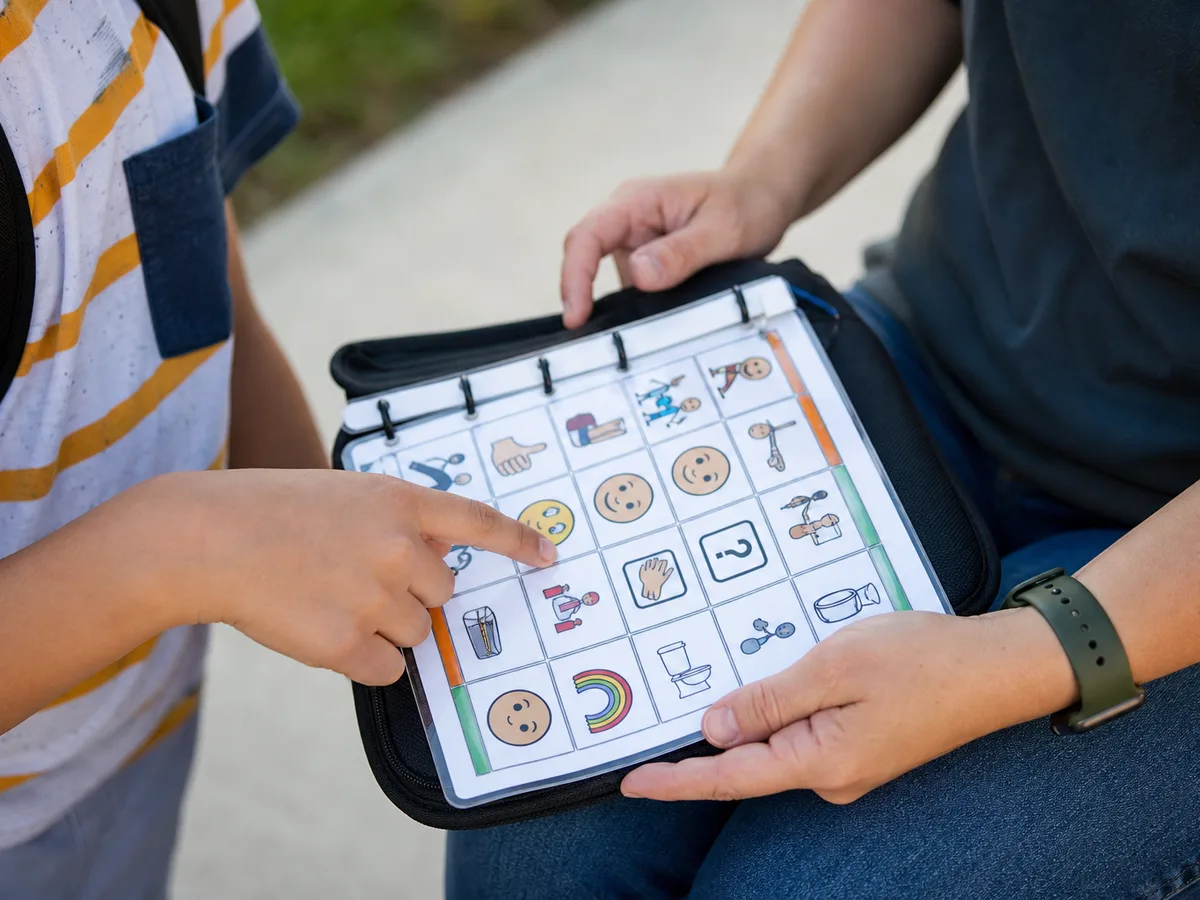
- Identify and support a range of communication methods beyond speech, including AAC and nonverbal strategies
- Recognize common signs of communication breakdowns and respond constructively
- Apply practical strategies to support communication access and participation in daily routines
- Document and share communication patterns for consistent team support
- You'll be able to differentiate between expressive, receptive, and social communication in autism. This means understanding the unique ways autistic individuals send, receive, and use messages
- You'll identify and support a range of communication methods beyond speech, including AAC and nonverbal strategies. Recognizing these methods helps ensure everyone has a way to communicate