
About this course
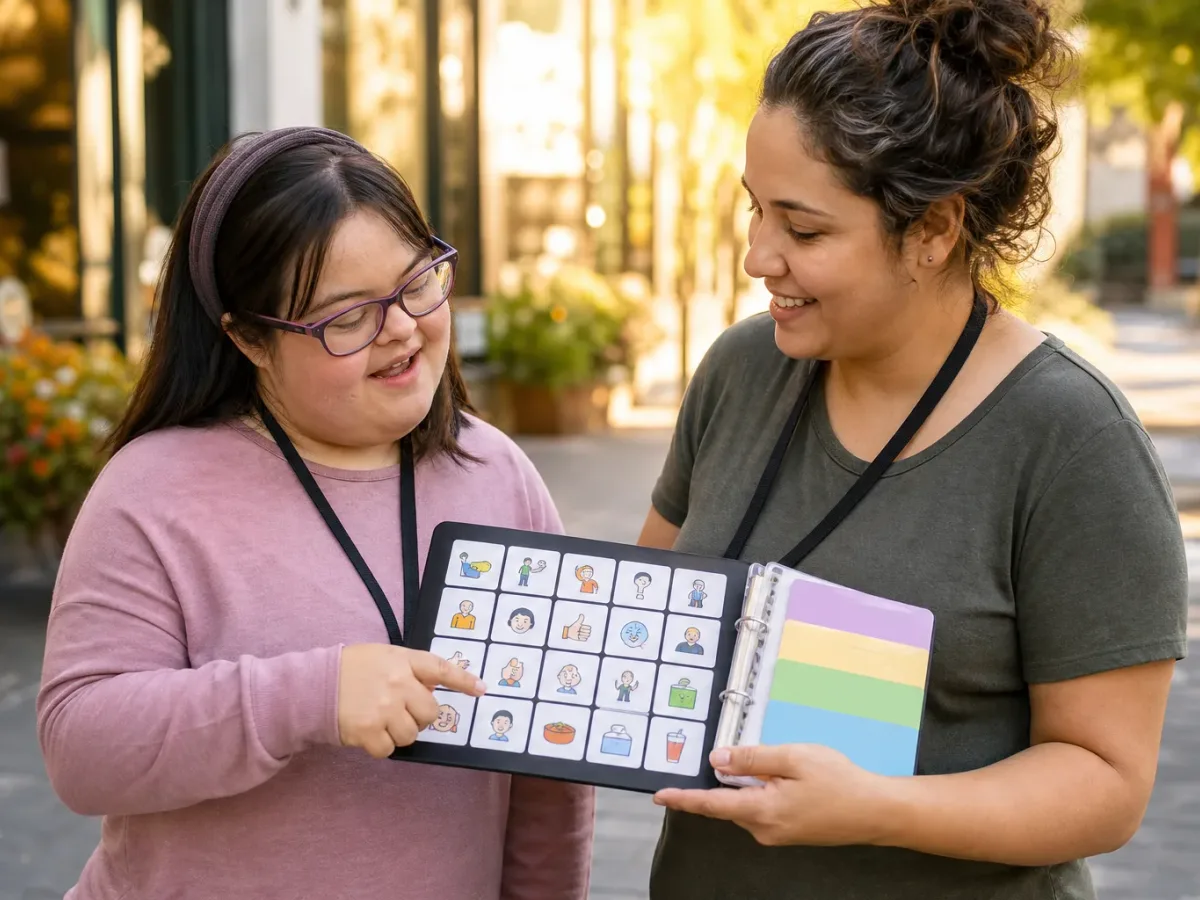
This course teaches Direct Support Professionals the foundations of communication in IDD and human-services settings. Learners study the communication process — sender, receiver, channel, and feedback — and the verbal, paraverbal, and nonverbal modes people use; speech, language, and communication differences in intellectual and developmental disabilities, including speech deficiencies of articulation, fluency, and voice, receptive versus expressive language disorders, and common profiles seen with Down syndrome, autism, and cerebral palsy-related motor speech; augmentative and alternative communication from no-tech gesture, sign, and communication boards through low-tech picture exchange to high-tech speech-generating devices, and the DSP's role in honoring and maintaining AAC; the DSP's contribution to communication assessment through observation, communication dictionaries and profiles, and feeding information to speech-language pathologists and the team; active listening, wait time, plain language, offering choices, and respecting communication as behavior; avoiding communication roadblocks and choosing support over control; implementing communication programs with consistency, continuity, and clear staff-to-staff information transfer; and documenting communication objectively in service records.